What Is The Best Way To Prepare A Site for DURASKIRT™?
The reason for choosing a product such as DURASKIRT™ is that you want your manufactured home pit set. Thus, we’re frequently we’re asked by contractors what is the best way to prepare a site for DURASKIRT™ mobile home skirting. Ideally, for mobile home skirting installation, the home should be set up level on a gravel pad that extends outside the home’s perimeter by a couple of inches.
Gravel Pad & Access
The home pad should be excavated, allowing 18” to 24” around the perimeter to allow for workers. One more thing to consider is accessibility. Since the panels weigh approximately 68 lbs., it makes it easier to have clean, level access from the crates to the home.
Excavating for Blocking Height
Soils preparation.
There are a few key steps to consider when preparing a gravel pad for DURASKIRT™ mobile home skirting. First, assess the soil’s ability to support the home; it’s essential to dig down to native, supportive soil free of vegetation to create a stable foundation. Next, once the site is excavated, measure the manufactured home’s waste lines to ensure there is sufficient slope toward city sewers or a septic tank. This information, typically provided by the factory before shipment, includes the exact location and dimension from floor or beam height, which is crucial for planning the layout.
With the sewer height established, adjust the level by bringing in gravel, ensuring the finished height from the gravel to the bottom of the home’s joists is exactly 31”. This optimal height minimizes the need to cut DURASKIRT™ panels for a seamless fit. Additionally, when installing DURASKIRT™ on wet soil, it’s important to lay down a layer of gravel first for drainage and stabilization. Alternatively, if the soil remains wet, digging down about a foot to reach drier soil before laying the DURASKIRT™ fabric can be effective. This dry, compacted base is essential because it provides the necessary friction for the fabric to lock in place securely, preventing shifting over time. By carefully preparing the site with these steps, you’ll create a strong, durable foundation that supports both the home and the DURASKIRT™ skirting.
A Word on Factory Installed Belly Band
Factory-installed belly band that leaves a 2” distance from the bottom of the rim joist to the bottom of the belly band is optimal. Some of the brands that do this are Marlette and Fleetwood. This saves time and material when installing DURASKIRT™.
Although these are the optimal conditions for DURASKIRT™, they certainly do not stop us from being able to prepare all sites. We’ve installed DURASKIRT™ on slopes and extreme height variations where we extend the framework under the home. This style is called a stepped foundation look, and we will be covering this in another article with photos.
For more information about DURASKIRT™ mobile home skirting, call us, today, at 360-333-5498. You can also request information by completing the form at the bottom of this page (in the footer).
Skirting for Manufactured Homes Made to Look Site-Built
Considering community desires today, manufactured homes must be able to fit into residential neighborhoods. In order to accomplish this, the home essentially needs to look site-built. This is where concrete mobile home skirting is useful.
Most often, site-built homes have a poured-in-place perimeter foundation, stem wall, and footing. Calling this a perimeter foundation for a manufactured home is wrong. Just because it can support the weight of the home on the perimeter does not mean it is a foundation. In some ways, this can be detrimental as it is subject to weather and moisture, not to mention it gets in the way of properly securing the tie-downs. The better system is to support the structure under the home, tucked away from nature’s elements.
Manufactured homes are supported away from the perimeter of the home. This is a great design but leaves a distinctive space beneath the manufactured home. So, how do you take a great design still find a way to skirt match site-built structures? Well, there are a couple of methods to accomplish this.
The stem-wall foundation. The first method is pouring a stem-wall foundation, although entirely unnecessary, around the perimeter. This methodology is costly in requiring a manufactured home to be lifted over and set inside the wall. Although, sometimes the wall can be poured under the home after the setup. Obviously, many contractors loathe doing this for customers.
Concrete mobile home skirting kits. Installing concrete mobile home skirting kits can give an appearance similar to a poured stem-wall foundation. However, Concrete mobile home skirting installation can be done without removing the manufactured home, thus making it much simpler.
DURASKIRT™ Mobile Home Skirting Kits
Consequently, the most popular method is using concrete skirting for manufactured homes like DURASKIRT™. The system consisting of concrete boards or panels set up around the perimeter is a genus. This system serves the following purposes:
Guarding the underfloor with concrete.
Site-built look.
Meets FHA & VA loan requirements.
A long-lasting skirting solution.
Best for matching residential neighborhoods.
Two more reasons for choosing DURASKIRT™ concrete skirting for manufactured homes are simple installation and great customer support.
How Do You Skirt a Manufactured Home on a Sloped Lot?
Installing mobile home skirting on a sloped lot takes more than a basic skirting product. It takes a system built for uneven ground, long-term protection, and a clean finished appearance. After nearly 26 years of helping manufactured homeowners across the United States, DURASKIRT™ has become a trusted choice for challenging sloped installations.
Why Sloped Lots Need a Different Skirting Approach
Skirting a manufactured home on level ground is usually straightforward because the panel heights are often similar around the home. On a sloped lot, however, one side may sit much higher than the other, creating large openings, uneven gaps, and areas where ordinary skirting products can fall short. DURASKIRT™ is designed to solve those problems with durable concrete panels that can be adapted to the site.
On a slope, skirting must do more than hide the crawlspace. It should follow the grade, protect the underside of the home, resist damage, and give the home a finished, site-built appearance. DURASKIRT™ makes this easier because the panels can be planned around step-downs, framing, bracing, and uneven soil conditions.
As the manufacturer of DURASKIRT™, we are often asked, “How high can your mobile home skirting panels go?” Our answer is simple: “As high as you need.” With the right installation method, DURASKIRT™ can handle almost any height, making it an excellent option for homes placed on steep or uneven lots.
Plan Before Installation
Before installing mobile home skirting on a sloped lot, measure the height around the entire home. Start at the lowest point and continue to the highest point. These measurements will show where step-downs are needed and how tall the panels should be in each section.
Drainage is also important. Whenever possible, water should flow away from the home. Poor drainage can create moisture problems under the structure and shorten the life of some skirting materials. Because DURASKIRT™ concrete panels are designed for ground burial, they are especially useful where skirting must meet uneven soil, extend below grade, and still deliver a clean, professional look.
Choose DURASKIRT™ for Below-Grade Protection
Manufactured homeowners often want skirting that looks like a natural extension of the home—not an afterthought. That can be difficult with wood skirting because wood should not touch soil. On a sloped lot, this becomes an even bigger issue because some sections must extend lower than others. DURASKIRT™ solves this challenge by providing a concrete skirting solution that can safely extend below grade.
Why Ground Contact Matters
Ground contact is one of the biggest concerns when skirting a sloped lot. Many materials are not made to touch soil and may rot, warp, or deteriorate over time. Wood should stay at least 6 inches above the dirt, which often limits design options. DURASKIRT™ gives homeowners and installers more flexibility because it is made for below-grade use.
DURASKIRT™ is designed for ground burial, allowing the panels to be installed below grade and properly backfilled. This creates a stronger barrier around the base of the home, helps discourage rodents and pests from entering underneath, and provides the durability homeowners expect from a premium concrete skirting system.
Using DURASKIRT™ with wood can create the site-built appearance many manufactured homeowners want, even on a sloped lot. It also helps reduce the risk of rotting skirting, improves rodent prevention, and delivers a longer-lasting finish than many traditional skirting options. For the best results, keep wood at least 6 inches above the dirt and use DURASKIRT™ where below-grade protection is needed.
DURASKIRT™ Step-Down Framing for Sloped Lot Skirting
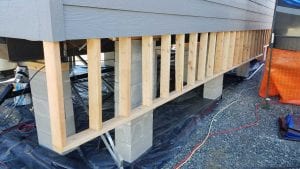
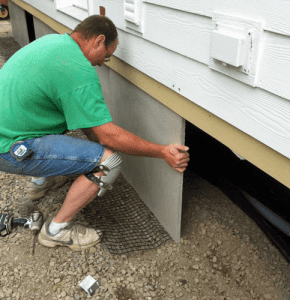
For a cleaner, stronger mobile home skirting installation on sloped lots, use standard framing materials with matching siding to create step-downs that follow the grade. This helps DURASKIRT™ concrete skirting panels deliver a finished, site-built appearance while supporting below-grade protection where the slope requires it. Install paper under the siding to help keep moisture out of the crawlspace. Important Step! After framing is installed beneath the home’s exterior rim joist, brace it back to the I-beams for added support. Proper bracing is essential. For 30″ of backfill, secure bracesto the steel beams no more than 24″ O.C. See photo.
Ready to solve your sloped-lot skirting challenge? Choose DURASKIRT™ concrete skirting panels for a stronger, cleaner, and longer-lasting mobile home skirting solution built for below-grade protection and a finished, site-built look. Contact DURASKIRT™ today to get expert help planning your project and order the right kit for your installation.
Get a Finished, Site-Built Look with DURASKIRT™
Many manufactured homeowners want their home to look more like a traditional site-built house, and DURASKIRT™ makes that goal easier to achieve—especially on sloped lots. When skirting simply follows uneven ground without a clear design plan, the result can look unfinished. Step-down framing allows the siding above the DURASKIRT™ panels to match the home, while the premium concrete skirting below handles the critical ground-contact area.
The result is a cleaner, stronger, and more permanent appearance that helps the home look like it was built that way from the start. Instead of one long, uneven skirting wall, step-downs create natural visual breaks that follow the slope. With the right layout for siding, lap reveals, trim, and DURASKIRT™ concrete panels, homeowners can achieve a durable, factory-direct skirting solution that adds curb appeal, below-grade protection, and long-lasting value.
Stop moisture, pests, and uneven skirting before they start. Choose DURASKIRT™ today for a stronger, below-grade concrete skirting solution. Contact us now to get the right factory-direct kit.
DURASKIRT™ Installation Tips for a Stronger Finished Look
Step-down framing follows the slope and prepares the home for DURASKIRT™ concrete skirting panels than install below.
Align framing with the home above for a cleaner manufactured home skirting installation.
Match the siding brand and style to help the home achieve a site-built appearance.
Keep lap siding reveals consistent for a professional, finished look.
Brace framing properly so backfilled DURASKIRT™ concrete panels perform as intended.
Keep wood at least 6 inches above soil and let DURASKIRT™ handle below-grade protection.
Use hot-dipped galvanized nails for a durable siding installation that complements DURASKIRT™ mobile home skirting.
Avoid Costly Skirting Mistakes with DURASKIRT™
One of the biggest mistakes in manufactured home skirting is placing wood skirting or framing too close to the soil. Moisture can lead to rot, repairs, and a shorter service life. DURASKIRT™ concrete skirting panels help solve this problem by giving homeowners a durable below-grade skirting solution where ground contact is required.
Backfilling before proper bracing is another costly mistake. DURASKIRT™ panels are built for strength, but the framing around them still needs solid support. Correct bracing, proper grading, and coarse rock backfill help create a stronger mobile home skirting installation that performs better over time.
Once the framing is braced, papered, and sided, install DURASKIRT™ as your premium mobile home skirting solution. For better below-grade protection, we recommend burying DURASKIRT™ at least 6 inches into the soil and backfilling with coarse rock to help block rodents from digging underneath.
DURASKIRT™ FAQs for Sloped Lot Skirting
Can manufactured home skirting be installed on a steep slope?
Yes. Manufactured home skirting can be installed on a steep slope, but the right system matters. Step-down framing, proper bracing, and DURASKIRT™ concrete panels designed for ground burial make sloped lot skirting cleaner, stronger, and more reliable.
How tall can mobile home skirting be?
Mobile home skirting height depends on the home, lot, and installation method. With DURASKIRT™, your skirting can be planned to fit the height your project needs, especially when installed with proper framing on sloped areas.
Should skirting be buried in the ground?
Some skirting materials should never be buried, but DURASKIRT™ is made for ground burial. Installing the panels at least 6 inches below grade and backfilling with coarse rock creates a stronger barrier and helps reduce rodent access under the home.
Why use a hybrid skirting method on a sloped lot?
A hybrid skirting method combines upper step-down framing and siding with DURASKIRT™ concrete panels near the ground. This keeps wood away from soil, improves below-grade protection, and helps the home achieve a clean, site-built look.
With proper step-down framing and DURASKIRT™ concrete skirting panels, a manufactured home on a sloped lot can look clean, permanent, and well protected. The finished result gives your home the site-built appearance many homeowners want, while adding the durability and below-grade protection ordinary skirting materials often lack. If you have not started shopping for a new mobile home, you may also want to read our article, “Finding The Best Mobile Home Brands.”
Don’t settle for skirting that fails on a slope. Choose DURASKIRT™ concrete skirting panels for lasting below-grade protection, a clean site-built look, and the strength your manufactured home deserves. Contact DURASKIRT™ today to get expert help and order the right factory-direct kit for your project.
Mobile homes—also known as manufactured homes—have evolved tremendously in design, comfort, and functionality. Yet one essential component that often gets overlooked is skirting for mobile homes.
More than just an aesthetic feature, mobile home skirting plays a vital role in stabilizing the home, enhancing its appearance, improving energy efficiency, and protecting against pests and weather damage. Whether you’re upgrading existing skirting or building a new home, the right approach to skirting for mobile homes can make a significant impact. Below are six smart ideas to help you make an informed and confident choice.
1. Inspect and Repair the Rim Joist
Before any mobile home skirting installation, inspecting and repairing the rim joist is critical—especially in older homes.
Inspect Thoroughly: Walk around the perimeter and check the rim joist for rot, decay, or signs of damage.
Fix First: Address any structural concerns before proceeding with skirting installation to ensure stability.
Professional Insight: If extensive damage is found, consider having a licensed contractor evaluate and repair the rim joist to support your skirting properly.
2. Level the Ground Around the Home
For a clean, seamless appearance, ensure the ground beneath your mobile home is level before applying skirting for mobile homes.
Consistency is Key: A level base ensures your skirting fits snugly and looks uniform.
Use the Right Tools: Shovels, measuring levels, and grading rakes can help you create a flat surface.
Check Before You Install: Even minor ground irregularities can cause gaps or warping in your mobile home skirting panels.
3. Consider DURASKIRT™ for Durability and Style
If you’re looking for long-lasting, low-maintenance skirting, DURASKIRT™ is a top-tier option for mobile home skirting.
Built to Last: Made from reinforced concrete, DURASKIRT™ stands up to pests, moisture, and extreme weather.
Pest & Weather Protection: Its solid construction acts as a barrier against rodents and the elements.
Maintenance-Free: Unlike vinyl or wood skirting, DURASKIRT™ requires little to no upkeep.
Sleek Aesthetic: With various finishes and modern designs, it elevates the appearance of your home.
4. Explore a Range of Skirting Materials
When selecting skirting for mobile homes, understanding your material options can help you choose the best solution for your needs and budget.
Vinyl Skirting: Affordable and lightweight, vinyl is common but vulnerable to fire and can wear out faster in harsh climates.
Concrete Panels (like DURASKIRT™): Extremely durable and weather-resistant. Although more expensive up front, they offer unmatched longevity and protection.
Metal Skirting: Strong and reliable, though susceptible to dents over time.
Wood Skirting: Attractive but high-maintenance and prone to water damage and pests. One homeowner shared their wood skirting absorbed water and caused over $40,000 in damage.
Faux Stone/Brick Panels: Offers an upscale look with moderate durability—ideal for aesthetics but may not offer the same strength as concrete.
Choosing the right material is crucial. Whether you prefer traditional charm or modern strength, the right mobile home skirting solution enhances both function and appearance.
5. Decide Between DIY and Professional Installation
Should you install the skirting yourself or hire a professional? The decision depends on your skill level, timeline, and budget.
DIY Skirting Projects: If you’re handy, installing skirting for mobile homes can be a rewarding, cost-saving project. Just be sure to measure carefully and account for ventilation.
Hiring Professionals: Contractors bring the benefit of experience, efficiency, and code compliance. They also ensure your mobile home skirting is installed to last.
Whichever route you choose, proper installation is key to maximizing durability and performance.
6. Know the Permit Requirements
Before installing skirting for mobile homes, always check your local building codes and permit requirements.
Stay Compliant: Some municipalities restrict flammable or high-maintenance materials like wood.
Protect Your Investment: Adhering to guidelines ensures your skirting is safe, legal, and structurally sound.
Failing to comply could lead to costly fines or forced removal of non-compliant skirting.
Final Thoughts
Whether you’re planning a new installation or replacing old panels, mobile home skirting is more than a finishing touch—it’s a vital element of home maintenance and protection. From inspecting the rim joist to choosing the right materials and understanding permit requirements, each decision contributes to the long-term success of your skirting project.
For expert guidance and top-tier materials like DURASKIRT™, contact us at (360) 531-6668. Our team is committed to helping you find the perfect skirting for mobile homes—one that fits your lifestyle, budget, and peace of mind.
Trailer Skirting Kits: How to Find the Best Option for Your Home
Choosing the right trailer skirting kit may not seem like the most exciting part of owning a mobile home, manufactured home, park model, tiny home, or trailer, but it is one of the most important. Skirting does more than cover the open space beneath your home. It helps protect the crawlspace, improves the finished appearance of the home, and can make the entire property look cleaner and more permanent.
If you are comparing options for diy mobile home skirting, it helps to know what separates a basic skirting product from one that is built to last. Some materials may look good when they are first installed, but they can weaken over time from moisture, pests, wind, and everyday exposure to the weather. That is why many homeowners are looking for stronger, more durable options when choosing skirting for manufactured homes.
Why Trailer Skirting Matters
Trailer skirting is the material installed around the base of a home to close off the open space between the ground and the bottom of the structure. While it improves curb appeal, its purpose goes much deeper than appearance.
Good skirting can help protect the underside of the home from animals, blowing debris, harsh weather, and excess moisture. It can also help create a more finished foundation look, which makes a mobile or manufactured home feel more complete. For many homeowners, skirting is one of the most noticeable upgrades they can make to the outside of the home.
Without proper skirting, the underside of the home is left exposed. That open area can become a place where pests hide, wind moves freely, and moisture collects. Over time, those issues can lead to bigger maintenance concerns. A strong skirting system helps create a cleaner barrier while still allowing proper ventilation when installed correctly.
What to Look for in Trailer Skirting Kits
There are many trailer skirting kits available, but they are not all made with the same level of quality. When comparing products, homeowners should look beyond the price and consider how the material will perform over time.
Here are a few important things to consider:
Material strength: The best skirting materials should be able to stand up to weather, moisture, and normal outdoor wear.
Ease of installation: A good kit should come with clear instructions and helpful support for homeowners who want to install it themselves.
Finished appearance: Skirting should improve the look of the home and create a clean, foundation-like appearance.
Pest resistance: Strong skirting can help reduce access points for rodents and other animals.
Ventilation: The crawlspace still needs airflow, so the skirting system should allow the area beneath the home to breathe properly.
Long-term value: A cheaper product may cost less upfront, but it may need to be repaired or replaced sooner.
Why Material Choice Is So Important
One of the biggest mistakes homeowners make is choosing skirting based only on the lowest price. Vinyl, wood, and other lightweight materials may be common, but they can have limitations. Wood can be affected by moisture and pests. Thin materials may crack, bend, or become damaged more easily. In areas with rough weather or uneven ground, weaker materials may not provide the long-term durability homeowners are looking for.
Concrete skirting offers a stronger alternative. DURASKIRT™ uses real concrete skirting panels designed to create a clean and solid look around the base of the home. This type of skirting is especially helpful for homeowners who want something more durable than traditional options and more attractive than a temporary fix.
For homeowners researching skirting for manufactured homes, concrete panels can be a smart choice because they offer strength, protection, and a finished appearance. They can help make the home look more like a site-built house while also serving a practical purpose around the crawlspace.
A Good Skirting Kit Should Be DIY-Friendly
Many homeowners want to save money by handling their own installation. That is why diy mobile home skirting has become such a popular option. However, a DIY project is only helpful if the product is designed with the homeowner in mind.
A good skirting kit should include the materials needed for installation, along with clear guidance. Homeowners should be able to access instructions, drawings, photos, videos, and support when questions come up. This is especially important because every home and lot can be a little different. Some homes sit higher off the ground, some are closer to the ground, and some properties have uneven areas that require extra planning.
DURASKIRT™ offers DIY mobile home skirting kits that are built for homeowners who want a stronger skirting solution without having to start from scratch. Their kits include panels and accessories, and they offer resources to help guide the installation process. For someone who is comfortable with hands-on projects, this can make the process more manageable.
Different Homes Need Different Skirting Solutions
Not every trailer, mobile home, or manufactured home is the same size. Some are single-wide homes, some are double-wides, and some are larger custom layouts. That is why it is helpful to choose a skirting product that comes in different kit sizes and panel heights.
DURASKIRT™ offers mobile home skirting kits in different sizes and heights, which allows homeowners to choose the package that best fits their home. This is helpful because the height between the ground and the bottom of the home can vary. Some homes may need shorter panels, while others may need taller panels or a combination of sizes.
Before ordering a skirting kit, homeowners should measure carefully. Linear footage, average height, access points, vents, and ground conditions should all be considered. Taking the time to measure correctly can help reduce waste, avoid delays, and make installation smoother.
Skirting Helps Improve Curb Appeal
One of the most noticeable benefits of new skirting is the way it improves the appearance of the home. An exposed crawlspace can make a home look unfinished, even if the rest of the exterior is well maintained. When the base is enclosed with a clean skirting system, the home instantly looks more complete.
Concrete skirting can create the appearance of a stronger foundation, which is one reason many homeowners like it. It gives the home a more permanent look and can complement siding, porches, decks, landscaping, and other exterior improvements.
This matters because curb appeal affects how people feel about a home. Whether you plan to stay in the home for many years or eventually sell it, a well-finished exterior can make a strong impression.
Protection From Weather and Pests
Skirting also plays a practical role in protecting the underside of the home. Wind, rain, snow, animals, and debris can all affect the crawlspace area. A durable skirting system helps create a barrier that reduces exposure and helps keep the area cleaner.
Rodents and other animals often look for sheltered spaces. If the underside of the home is open, it can become an easy place for them to enter. Strong skirting can help limit access and make the home less inviting to unwanted pests.
Weather protection is another important benefit. While skirting does not replace proper home maintenance, drainage, or ventilation, it can help shield the underside of the home from direct exposure. This is especially valuable in areas that experience high winds, heavy rain, or seasonal temperature changes.
Do Not Forget About Ventilation
While closing off the crawlspace is important, that area still needs to breathe. Proper ventilation helps reduce moisture buildup and supports a healthier crawlspace environment. Skirting that is installed without considering airflow can create problems over time.
When choosing trailer skirting kits, homeowners should think about both protection and ventilation. The goal is to create a strong, attractive barrier without trapping moisture beneath the home. This is why it is important to follow the manufacturer’s installation instructions and use the right accessories for the project.
Why DURASKIRT™ Is a Strong Option
DURASKIRT™ is designed for homeowners who want a durable, attractive, and practical skirting option. Their concrete skirting panels are made to provide a clean foundation look while helping protect the underside of the home. The kits are also created with DIY installation in mind, making them a strong option for homeowners who want to take on the project themselves.
Another benefit is versatility. DURASKIRT™ products can be used for mobile homes, manufactured homes, park models, tiny homes, cabins, sheds, decks, porches, and other raised structures. That makes them useful for many different types of properties.
For anyone comparing skirting for manufactured homes, the goal should be to find a product that looks good, performs well, and offers long-term value. DURASKIRT™ gives homeowners a way to move beyond temporary-looking materials and choose a skirting system that feels more permanent and polished.
Before You Buy a Trailer Skirting Kit
Before purchasing a kit, take time to review your home, your lot, and your goals. The right skirting choice depends on more than the size of the home. You should also consider the condition of the ground, how much space exists beneath the home, whether the lot is level, and whether there are any access points that need to remain available.
It is also wise to review installation resources before ordering. If you are planning a diy mobile home skirting project, make sure you understand the steps involved and have the proper tools. A little preparation can help prevent frustration once the materials arrive.
When comparing trailer skirting kits, look for a product that offers strength, clear instructions, reliable support, and a finished look you will be happy with for years. The cheapest option is not always the best option, especially when the skirting is protecting one of the most important parts of your home.
Choosing Skirting That Lasts
Trailer skirting is an important investment in the appearance and protection of your home. The right kit can help improve curb appeal, protect the crawlspace, reduce pest access, and create a more finished foundation look. For homeowners who want something stronger than lightweight materials, concrete skirting is worth serious consideration.
DURASKIRT™ offers a durable solution for mobile homes, manufactured homes, trailers, park models, tiny homes, and other raised structures. Whether you are upgrading old skirting or installing skirting for the first time, choosing a high-quality kit can make a noticeable difference.
If you are ready to improve the look and protection of your home, consider a DURASKIRT™ trailer skirting kit. With strong concrete panels, DIY-friendly resources, and options for different home sizes, it is a practical choice for homeowners who want skirting that looks good and is built to last.
Skirting Panels for Mobile Homes — How Exactly Do They Work?
If you’re about to buy a mobile home, you’ve undoubtedly heard of (CMU) skirting panels, but how exactly do they work? And what makes skirting panels for mobile homes or shed skirting so important?
Mobile home skirting kits cover up the crawl space underneath your home
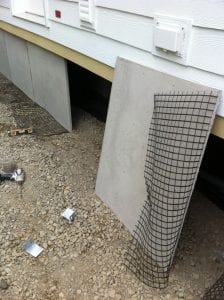
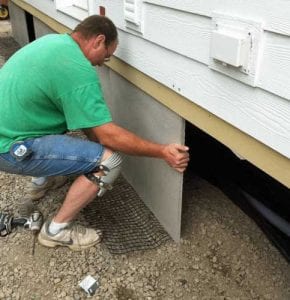
DURASKIRT™ concrete skirting panels for mobile homes are easily installed.
(CMU) Skirting panels are not simply to make your home more fashionable. Skirting panels will provide some very important functional benefits for your mobile home.
Keep Critters Out – Your home is a shelter, but you want it to be your shelter, not a shelter for various animals. By adding skirting panels, critters like raccoons, rats, and snakes won’t be able to set up their home underneath your home. This is true for sheds, too. Shed skirting can keep animals from nesting or relieving themselves under your shed.
Help To Stabilize the Temperature Inside Your Mobile Home – All homes lose a little bit of losing a bit of their temperature throughout the day, including through the floor. Skirting panels enclose the crawl space under your home, thus helping to insulate your home and maintain the temperature. This will help to keep the inside of your home cooler in the summer and warmer in the winter.
Protect Against Back-Fill – Before your home can be placed on its lot, the ground must be excavated. Meaning, that some of the dirt must be scooped out so that your home will be level. However, that dirt isn’t just carted away. Instead, it’s piled up evenly around your home which is called back-filling.
Mobile home skirting needs to be vented very carefully
Let’s say we attach some solid, concrete board, skirting panels to the bottom of your mobile home. What would you think will begin happening? You would wind up with a space that’s warm and muggy. Why? The moisture that naturally rises out of the soil ends up being trapped underneath your home.
Over time, all that stale, moist air will create dangerous mold and cause the underside of your home to rot. Talk about a major mess! That’s why skirting panels must come with special vents that are specifically designed to give the underside of your home the airflow it needs without giving critters a space to wiggle through. A good skirting manufacturer will also space those vents very carefully so that the underside gets good cross-ventilating.
Some venting systems can allow water to get into the crawl space under your home. Just like the moisture from the ground can cause mold or rot, if the venting system for your home allows water in, it can allow for sitting pools of water as well as humidity and cause great damage to your home.
Mobile home skirting needs to use quality materials
Even though you can find skirting panels in a variety of materials and finishes, they’re not created equally. Some last longer than others and some are more easily chewed, scratched, or broken by animals. Some provide good venting and others do not. DURASKIRT™ Concrete Board provides strong, long-lasting protection, and our special vent well technology will keep your crawl space well vented and help to prevent water from collecting under your home.
Contact us today to find out more or order your mobile home siding.
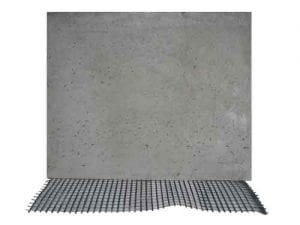
DURASKIRT™ PRO 3037 30″ x 37″ x 3/4″. Concrete skirting panels for mobile homes.
There are various types of mobile home skirting products available on the market today. Choosing the appropriate skirting product for your home is significant for long-term value, durability, and maintenance costs. Concrete skirting is a practical option due to current manufacturing advancements, especially with modern systems designed specifically for manufactured homes rather than traditional poured concrete methods.
Typically, concrete skirting is more expensive than wood or hardy skirting but may be worth the additional cost. Vinyl skirting is less expensive initially but requires replacement every five to seven years due to cracking, warping, or weather damage. Over a thirty-year mortgage, the cumulative cost for vinyl skirting can be significantly higher when factoring in repeated replacements and repairs. Although concrete skirting has a higher upfront investment, it offers long-term savings through durability, minimal maintenance, and resistance to environmental wear.
Modern concrete skirting systems are also engineered for faster installation and structural stability. Unlike older methods that required extensive labor, newer panelized systems are designed to be installed efficiently while still providing the strength and appearance of a permanent foundation.
Advantages of Using Concrete Skirting
Many individuals delay replacing their mobile home skirting products until they encounter rodent or pest problems. Unfortunately, by that point, the damage is often already extensive. Rodents can chew through traditional materials like vinyl or wood, creating entry points that lead to insulation damage, heat loss, and increased energy bills. Moisture intrusion can also become an issue once the barrier is compromised.
Repairing this type of damage can be costly and time-consuming, often involving removal of damaged materials, pest control, insulation replacement, and full skirting replacement. Concrete skirting helps prevent these issues from the start by creating a solid, durable barrier that is far more resistant to pests, impact, and environmental conditions.
Concrete skirting also offers additional benefits beyond protection. It is resistant to rot, mold, and warping, which are common problems with other materials. Because it does not degrade easily over time, homeowners spend less on maintenance and repairs. In areas with extreme weather, including high winds or heavy rain, concrete skirting provides added stability and protection compared to lighter materials.
Another advantage is customization. Concrete skirting can be painted or stained to match your home’s exterior design. Some homeowners choose to leave the natural finish for a clean, modern look, while others customize the color to blend seamlessly with siding, trim, or landscaping. This flexibility allows homeowners to improve curb appeal without sacrificing durability.
DURASKIRT™ concrete skirting panels for mobile homes are a wonderful product.upscale residential appearance. Concrete skirting provides the look and feel of a site-built home.
High-End Residential Appearance
DURASKIRT™ offers a smooth wall concrete finish that provides a high-end residential appearance without the need for traditional foundation vents. Instead of visible grates or openings, modern systems are designed with built-in ventilation solutions that maintain airflow while preserving a clean exterior look.
The unobstructed design ensures that the skirting blends seamlessly with the home’s structure. This creates a more permanent, site-built appearance rather than the typical look associated with manufactured homes. Clean lines and uniform panels contribute to a polished finish that enhances overall curb appeal.
For homeowners looking to increase property value or simply improve aesthetics, this type of skirting can make a noticeable difference. In many cases, it becomes difficult to distinguish a manufactured home from a site-built home once the skirting is installed.
Making an Informed Decision
Among the mobile home skirting products available, DURASKIRT™ represents a logical choice for homeowners seeking durability, long-term savings, and an upgraded appearance. Its engineered design, combined with the strength of concrete, provides a reliable solution that addresses many of the common issues found with traditional skirting materials.
When evaluating your options, it is important to consider not just the initial cost, but the long-term performance, maintenance requirements, and overall impact on your home’s appearance. Choosing the right skirting product can protect your investment, reduce ongoing expenses, and enhance the look and feel of your home for years to come.
Manufactured Home Skirting Kits, Follow These Dos and Don’ts When Purchasing!
If you own a manufactured home, you’re likely required by local law to put skirting on it. However, before you simply reach for the first mobile home skirting kits you can find, take advantage of these dos and don’ts. They’ll help you make a good choice and give you more bang for your buck!
— DO purchase direct from DURASKIRT™ – Not Home Depot or Lowes
We have always sold our skirting and underpinning kits directly to the public. So when searching for DURASKIRT Lowes call us 360-333-5498!
— DO pay close attention to how it’s made
All mobile home skirting kits are not created equal. Some are made with vinyl, while others are made with aluminum or concrete. There are brands that have special vents to even out airflow. While others have a finish that’s designed to look like stacked stones. Still, more boast of being the best cold weather skirting product.
Bottom line — there’s a variety of options out there, so do some homework! For example, learn about the durability of different materials (concrete skirting, vinyl, and aluminum) and additional expenses may come up over time if the skirting material doesn’t hold up (rodent infestations, etc.) We think you’ll find concrete skirting is more effective and durable than vinyl or aluminum, and will save you money in the end. Also, understand how air circulates inside your crawl space, and thus, why a special vent would be important. The more informed you are, the better-finished product you can purchase!
— DO buy your mobile home skirting kits from a company that’s happy to help!
Some mobile home skirting kit manufacturers only care about making money. Once they’ve sold you a kit, they couldn’t care less if you struggle to install it. Others intentionally make the instructions difficult to comprehend so you give up and hire them (or their buddies) to install everything for you.
You can do better than that!
A good manufacturer will be happy to help with your skirting even after your purchase has gone through. Specifically, they’ll have an instruction manual that’s written in plain English, and they’ll post videos and other tips right on their website. Sure, they’ll offer their own installation services, but they’ll also make it relatively easy for you to do the installation work yourself, instead of trying to get you to spend more money!
— DON’T take winter for granted
If you live in a place that gets a lot of snow and ice, you’re going to need skirting for sheds that can keep up with weather changes, extreme temperatures, and moisture. Because of the way it’s constructed, it isn’t good to let a bunch of snow and ice pile up against ANY type of skirting, but some kits are better prepared to deal with nature’s wrath than others.
Before you buy anything, talk to the manufacturer about how their skirting is going to withstand winter. If you don’t like the answer, look for another kit!
— DON’T forget about your other structures
Yes, it’s called “mobile home skirting,” but these kits can also be used to enhance the look and function of your deck, above-ground pool, or hot tub. Skirting for sheds is the perfect way to enclose the bottom of your shed or backyard storage building, giving it a clean, finished appearance while adding protection from pests and the elements. So, before you put away the calculator, measure the space these structures occupy—chances are, some mobile home skirting will make them look and perform better!
Why DURASKIRT™? A Component of a Manufactured Home Foundation
Reason #1 – Proprietary Manufactured Home Foundations
E.R.B.S. Make Up Another Component of a Manufactured Home Foundation. They are also great when you pit set a manufactured home. Although there are more advantages, we first want to discuss the kinds of E.R.B.S. so you can determine which one you need.
E.R.B.S. Earthquake Resistant Bracing System
Let’s talk about the reasons why you should use DURASKIRT™. Did you know, that over the past twenty-five years, the manufactured home industry has undergone many changes? This includes new forms of mobile home underpinning (skirting) and new processes for how to install mobile home skirting. Another of those changing aspects is the use of proprietary engineered manufactured home foundations called E.R.B.S.
Earthquake Resistant Bracing Systems (E.R.B.S.) replacing tie-downs, runners and slabs. Additionally, these systems are replacing the need for concrete. Of course, the rising need for concrete skirting supports itself on native soils or gravel pads.
Reason #2 – Better Rodent Deterrence
Many people living in manufactured homes can attest to having rodent problems. Moreover, the causes for this can be attributed to only one thing, namely, poor quality mobile home underpinning (or skirting). The list of problems rodents are causing is vast.
The bottom line is the costs of dealing with the rodents and repairing the home can be well into tens of thousands of dollars in damages. That doesn’t include months or years of higher heating or air-conditioning bills due to rodent holes through insulation and ducting.
We have years of experience crawling under these homes and being firsthand witnesses. The light of these issues are more reasons we began producing DURASKIRT™. Equally important, we understand people need a quality, durable, reasonably priced barrier system.
Not only can it be backfilled without quickly rotting away but made strong to keep rodents at bay. We also observed a problem with venting and solved this issue with the “Hidden-Vent.”
Reason #3 – Hidden-Vent
Why DURASKIRT™? Hidden-Vent Feature.
Uniquely, the “Hidden-Vent” allows continuous airflow, so there’s no dead airspace. Because of its location and size, it performs well as an rodent guard as well. There are other surprising features to the “Hidden-Vent” as well:
Deters Large Animals
No Vent Wells Needed
Preventing Lawn Sprinklers from Soaking Crawlspace Through Vents
Continuous Airflow (No Dead Air Between Vents)
Reason #4 – Why DURASKIRT™ – Protects Against Rot
We commonly find that homes we inspect are rotting at the contact points of the skirting. As a matter of fact, after investigating, we find that moisture is being trapped, which is detrimental to the integrity of the mobile home underpinning and the home, itself. This has led to the replacement of hundreds of skirtings made of wood, vinyl, and masonry blocks.
The solution:
An important feature is designing DURASKIRT™ leaving airspaces between the top of the panels and the base of the home. This unique feature is working preventing trapping moisture and as a result rot. This is very important for the longevity of your manufactured home.
Conclusion
DURASKIRT™ is the most comprehensibly designed mobile home underpinning (skirting). Additionally, its engineering makes for a wonderful manufactured home skirting product. Call 360-333-5498 to order yours.
Why Insulating Mobile Home Skirting Is Unnecessary
Is it a good mobile home skirting idea to insulate the skirting? You may be surprised by the answer. Undeniably, mobile homes have been known in the past to be poorly insulated. That is why people have asked, “Should I insulate my mobile home?” when starting their mobile home skirtinginstallation.
Today’s mobile homes, otherwise known as manufactured homes,are made with heating and cooling bills in mind. Most of these homes have great insulation, offering a sealed road barrier to give good interior comfort. Because of this, the skirting needs only provide thermal shielding.
Good Idea! Best Thermal Shielding Skirting Product
Mobile Home Skirting Installation
What skirting offers the best thermal shielding? Concrete skirting products offer the best thermal shielding. Concrete offers both heat and cold transfer resistance, which makes it a great house skirting idea. It is also why lenders prefer concrete skirting over other skirting materials.
There’s Another Question to Ask Besides, “Should I Insulate My Mobile Home Skirting?”
Personally, the reason I do not insulate mobile home skirting is that the crawlspace needs to breathe. The underfloor can be a place where toxic gasses can seep from the ground. This includes radon gas, which is a big concern for many areas of the country. So, good ventilation for the mobile home skirting is a must, and insulating your skirting would hinder the ventilation.
So, What Is the Best Way to Keep Underfloor Drafts from Entering My Home?
This is a great question because, like me, you are probably irritated with cold, drafty floors. Over the years, we have found the best way to solve this problem is three-fold.
Creating a dry crawlspace or underfloor area.
The “Hidden Vent System” creates a dry crawlspace.
A fully closed underbelly with loads of insulation directly under your floor.
Finally, the DURASKIRT™ skirting system offers the best solution. Offering the best in the industry ventilation system, concrete thermal barrier, with a long-lasting material result. For more information, please call 360-333-5498.











Recent Comments