Skirting for Manufactured Homes Made to Look Site-Built
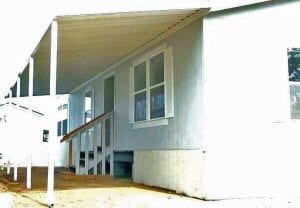
Considering community desires today, manufactured homes must be able to fit into residential neighborhoods. In order to accomplish this, the home essentially needs to look site-built. This is where concrete mobile home skirting is useful.
Most often, site-built homes have a poured-in-place perimeter foundation, stem wall, and footing. Calling this a perimeter foundation for a manufactured home is wrong. Just because it can support the weight of the home on the perimeter does not mean it is a foundation. In some ways, this can be detrimental as it is subject to weather and moisture, not to mention it gets in the way of properly securing the tie-downs. The better system is to support the structure under the home, tucked away from nature’s elements.
Manufactured homes are supported away from the perimeter of the home. This is a great design but leaves a distinctive space beneath the manufactured home. So, how do you take a great design still find a way to skirt match site-built structures? Well, there are a couple of methods to accomplish this.
The stem-wall foundation. The first method is pouring a stem-wall foundation, although entirely unnecessary, around the perimeter. This methodology is costly in requiring a manufactured home to be lifted over and set inside the wall. Although, sometimes the wall can be poured under the home after the setup. Obviously, many contractors loathe doing this for customers.
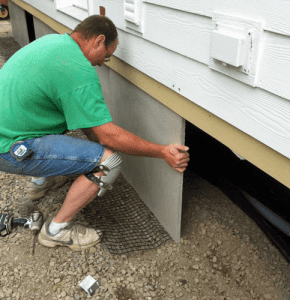
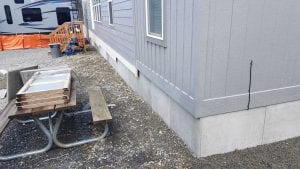
Concrete mobile home skirting kits. Installing concrete mobile home skirting kits can give an appearance similar to a poured stem-wall foundation. However, Concrete mobile home skirting installation can be done without removing the manufactured home, thus making it much simpler.
DURASKIRT™ Mobile Home Skirting Kits
Consequently, the most popular method is using concrete skirting for manufactured homes like DURASKIRT™. The system consisting of concrete boards or panels set up around the perimeter is a genus. This system serves the following purposes:
Guarding the underfloor with concrete.
Site-built look.
Meets FHA & VA loan requirements.
A long-lasting skirting solution.
Best for matching residential neighborhoods.
Two more reasons for choosing DURASKIRT™ concrete skirting for manufactured homes are simple installation and great customer support.
Why DURASKIRT™? A Component of a Manufactured Home Foundation
Reason #1 – Proprietary Manufactured Home Foundations
E.R.B.S. Make Up Another Component of a Manufactured Home Foundation. They are also great when you pit set a manufactured home. Although there are more advantages, we first want to discuss the kinds of E.R.B.S. so you can determine which one you need.
E.R.B.S. Earthquake Resistant Bracing System
Let’s talk about the reasons why you should use DURASKIRT™. Did you know, that over the past twenty-five years, the manufactured home industry has undergone many changes? This includes new forms of mobile home underpinning (skirting) and new processes for how to install mobile home skirting. Another of those changing aspects is the use of proprietary engineered manufactured home foundations called E.R.B.S.
Earthquake Resistant Bracing Systems (E.R.B.S.) replacing tie-downs, runners and slabs. Additionally, these systems are replacing the need for concrete. Of course, the rising need for concrete skirting supports itself on native soils or gravel pads.
Reason #2 – Better Rodent Deterrence
Many people living in manufactured homes can attest to having rodent problems. Moreover, the causes for this can be attributed to only one thing, namely, poor quality mobile home underpinning (or skirting). The list of problems rodents are causing is vast.
The bottom line is the costs of dealing with the rodents and repairing the home can be well into tens of thousands of dollars in damages. That doesn’t include months or years of higher heating or air-conditioning bills due to rodent holes through insulation and ducting.
We have years of experience crawling under these homes and being firsthand witnesses. The light of these issues are more reasons we began producing DURASKIRT™. Equally important, we understand people need a quality, durable, reasonably priced barrier system.
Not only can it be backfilled without quickly rotting away but made strong to keep rodents at bay. We also observed a problem with venting and solved this issue with the “Hidden-Vent.”
Reason #3 – Hidden-Vent
Why DURASKIRT™? Hidden-Vent Feature.
Uniquely, the “Hidden-Vent” allows continuous airflow, so there’s no dead airspace. Because of its location and size, it performs well as an rodent guard as well. There are other surprising features to the “Hidden-Vent” as well:
Deters Large Animals
No Vent Wells Needed
Preventing Lawn Sprinklers from Soaking Crawlspace Through Vents
Continuous Airflow (No Dead Air Between Vents)
Reason #4 – Why DURASKIRT™ – Protects Against Rot
We commonly find that homes we inspect are rotting at the contact points of the skirting. As a matter of fact, after investigating, we find that moisture is being trapped, which is detrimental to the integrity of the mobile home underpinning and the home, itself. This has led to the replacement of hundreds of skirtings made of wood, vinyl, and masonry blocks.
The solution:
An important feature is designing DURASKIRT™ leaving airspaces between the top of the panels and the base of the home. This unique feature is working preventing trapping moisture and as a result rot. This is very important for the longevity of your manufactured home.
Conclusion
DURASKIRT™ is the most comprehensibly designed mobile home underpinning (skirting). Additionally, its engineering makes for a wonderful manufactured home skirting product. Call 360-333-5498 to order yours.
Vent wells are essential components in mobile home skirting systems, ensuring proper ventilation and access to under-home areas. Mobile Home skirting is the material used – often concrete board or plastic – that creates a sealed perimeter around the home. It usually extends from the bottom of the siding of the home down to the dirt. They prevent moisture buildup, reduce mold risk, and allow for maintenance access.
The purpose of house skirting is to create a barrier to keep pests and rodents out from the underside of a home and also to give the home a more finished look. Many homeowners like house skirting ideas that give their home a more aesthetic appeal. Most importantly, house skirting is critical because it saves the home from potentially expensive mouse and rat damage.
Mobile Home Skirting Ideas
Enhancing your mobile home’s exterior involves selecting the right skirting material. Here are some popular options:
Vinyl Skirting: Affordable and easy to install, vinyl skirting comes in various colors and styles. It’s low-maintenance but may lack the durability of other materials.
Faux Stone or Brick Skirting: Offers the appearance of stone or brick without the high cost. These panels are lightweight and can significantly boost curb appeal.
Metal Skirting: Materials like aluminum or galvanized steel provide durability and a modern look. However, they can be prone to dents and may require additional insulation.
Wood Skirting: Provides a natural, rustic appearance. Options include traditional lattice, horizontal or vertical planks, and reclaimed wood. Regular maintenance is necessary to prevent rot and pest damage.
Concrete or Brick Skirting: Offers a permanent, sturdy solution with excellent insulation properties. Installation is more labor-intensive and may be costlier.
Incorporating Vent Wells into Mobile Home Skirting
When installing skirting, it’s crucial to integrate vent wells to maintain airflow and access:
Ventilation: Proper airflow prevents moisture accumulation, which can lead to mold and structural issues. Ensure vents are evenly distributed around the home.
Access Panels: Include removable sections or doors in the skirting to allow for routine inspections and maintenance of the home’s underside.
Compliance: Adhere to local building codes regarding ventilation requirements for mobile homes.
Why Do I Need Vents?
The underside of the home needs air; it must be allowed to breathe. That’s where venting and ventilation wells come into play. Vents are built into the house skirting system to allow air to enter and escape from the underside of the home. They let the air out without letting rodents in to nest and cause damage. A vent well is a specific component of the vent.
Ventilation Wells Vs. Other Vents
Our exclusive hidden-vent overcomes the need for vent wells.
Ventilation well creates an undisturbed space around the vent to allow it to breathe. Oftentimes, manufactured and mobile homeowners like having a cement slab poured and having it come right up to their front door. The slab can help eliminate the need for steps.
The ventilation well prevents the actual vent from being covered up by the cement. It comes up from the vent and allows air to escape the underside of the home. Without it, the vent wouldn’t be properly exposed and the home wouldn’t be allowed to breathe. A vent well is a necessary component of house skirting in order to give the vent space to breathe.
Find Out More.
If you are looking to get mobile home skirting ideas for your manufactured home, mobile home, or storage shed, or if you have questions about the concrete board or skirting materials, get in touch with us.
We at DURASKIRT™ will answer any questions you have, share information about house skirting, or help direct your concerns or inquiries. Our house skirting is uniquely designed in such a way that it doesn’t require ventilation well but still allows homes to breathe without letting rodents in to cause damages. Give us a call at (360)419-9909 and we’ll be happy to speak with you.
With today’s inflated prices, people are actively seeking alternatives to plywood, especially for applications like skirting for mobile homes. As markets fluctuate, contractors and homeowners alike are exploring more durable, cost-effective solutions. So, what are some mobile home skirting ideas that serve as excellent alternatives to plywood? Let’s explore into some top options.
Six Alternatives to Plywood
Hardie Siding
Hardie siding panels have been a popular alternative to plywood skirting for years. Known for their weather resistance and aesthetic appeal, Hardie panels can mimic the look of wood while providing added durability. However, they might not fare well in unheated crawlspaces, where moisture and condensation can compromise their longevity. This makes them better suited for short-term applications or areas with good ventilation.
FRP Wall Board
Fiberglass Reinforced Panels (FRP) are another viable substitute to plywood. These lightweight panels are available in various colors and textures, making them versatile for interior and exterior applications. While FRP is not structural, it’s an excellent option for areas requiring an easy-to-clean surface, such as mobile home interiors or covered skirting. Its resistance to moisture makes it a better choice for humid environments compared to traditional plywood.
Particle Board
Particle board, made from compressed wood particles and resin, can replace plywood in some applications. However, due to its wood content, it remains susceptible to the same price fluctuations as plywood. Additionally, particle board lacks the weather resistance needed for long-term outdoor use, making it less ideal for skirting unless sealed and protected from the elements. So, if you are trying to save money it may not be the best alternative to plywood.
Foam Board
Foam board or reinforced foam board can be a viable alternative to plywood. Designers and engineers are increasingly using foam board for various applications due to its strength and versatility. It’s a great option for those seeking mobile home skirting ideas that are both innovative and practical. The foam board is lighter and stronger and can easily replace the use of plywood in surf boards, boogie boards, and snow boards. Because of its strength and lighter weight many designers and engineers are having fun developing new uses or applications. However, additional framing may be required to support the foam panels, particularly for skirting applications.
Polycarbonate Sheeting
Polycarbonate sheets are a durable and cost-effective alternative to plywood, especially in areas prone to extreme weather. These sheets are commonly used for hurricane protection but are also finding their way into mobile home skirting designs. Their transparency or tinted options can add a modern aesthetic, and their resilience ensures long-term functionality. They are lightweight, easy to install, and can serve as a semi-permanent solution. Because of its relative low cost and availability this material is finding an ever-expanding market.
Alternatives to plywood and plywood skirting for manufactured homes.
Concrete Panels
Concrete panels are one of the most durable and cost-effective alternatives to plywood skirting especially, skirting for mobile homes. Products like DURASKIRT™ are specifically designed for mobile homes, offering unmatched longevity and resistance to moisture, pests, and weather. The ¾” thick concrete panels provide a clean, professional look and can be used in a variety of skirting applications, including:
Mobile Home Underpinning
Modern Deck Skirting
Modular Home Skirting
Park Model and Tiny House Skirting
Raised House Skirting
Shed Underpinning
DURASKIRT™ panels are a go-to option for those seeking mobile home skirting ideas that blend aesthetics with functionality. They are designed for long-term use, making them ideal for mobile homes, pole buildings, and even RVs.
Why Consider Alternatives?
Plywood has long been a staple material for construction and skirting, but it comes with drawbacks like susceptibility to moisture, warping, and cost volatility. Exploring alternatives not only offers better performance in certain conditions but can also be more affordable in the long run. Products like concrete panels and polycarbonate sheeting are excellent for homeowners who prioritize durability and appearance while keeping costs manageable.
Choosing the Right Alternative
When deciding on the best alternative, consider the following factors:
Environment: Areas with high moisture levels require materials like concrete or polycarbonate that resist water damage.
Durability: For long-term solutions, concrete panels like DURASKIRT™ offer unmatched performance.
Aesthetics: Hardie siding and polycarbonate sheeting can enhance the visual appeal of your home.
Budget: While some options may have higher upfront costs, their longevity often makes them more cost-effective over time.
Finding the perfect alternative to plywood requires understanding your needs and the unique challenges of your environment. Whether you’re looking for innovative mobile home skirting ideas or simply a durable material for a specific project, options like concrete panels, foam board, and FRP offer a blend of functionality and affordability. For long-lasting results, consider products like DURASKIRT™, which are purpose-built for mobile home skirting and underpinning needs.
The very first time I heard the word house skirting was in the 1970s. My parents bought a transitional manufactured home while we were building a large farmhouse. It was late summer when my father explained that we needed to build skirting for mobile homes to keep the underside of our home warm through the coming cold months. I had no idea at the time that this experience would shape my future—eventually leading me to become the manufacturer of DURASKIRT™, a trusted name in manufactured home skirting products.
So, let me explain further what manufactured home skirting is and why you need it. Firstly, skirting for mobile homes, also known as mobile home underpinning, is the material used to cover the bottom of a manufactured or mobile home. It extends from the bottom of the siding down to the ground or to the foundational slab.
What Does Skirting for Mobile Homes Do?
Manufactured Home Skirting
Manufactured house skirting serves several important functions that contribute to both the aesthetic appeal and structural integrity of a home, especially for mobile and manufactured homes. Here’s what house skirting does:
1. Protection from the Elements
House skirting provides a protective barrier around the base of a home, shielding the undercarriage and foundation from harsh weather conditions such as rain, wind, and snow. This helps prevent moisture buildup, which can lead to mold, mildew, and wood rot.
2. Pest Control
Skirting for mobile homes blocks access to the space beneath the house, preventing pests such as rodents, insects, and larger animals from nesting under the home. This reduces the chances of infestations and the potential damage they can cause to the structure or insulation.
3. Improved Energy Efficiency
Skirting helps insulate the home by enclosing the space beneath it, reducing drafts and heat loss in colder months. This can help maintain a consistent indoor temperature and lower heating and cooling costs.
4. Structural Stability
House skirting adds a layer of stability by minimizing airflow under the home, which can reduce the risk of the structure shifting or becoming unstable due to strong winds.
5. Aesthetic Appeal
Skirting for mobile homes improves the visual appearance of a home by covering up the unsightly underbelly and mechanical systems, giving the home a more finished and polished look.
6. Ventilation and Airflow
Properly installed skirting includes ventilation to allow air circulation beneath the home, preventing moisture buildup while still protecting against pests. This balance helps maintain a dry and stable environment under the home.
7. Storage
Skirting can also provide a concealed area for additional storage beneath the home. This is particularly beneficial in mobile and manufactured homes, where space may be limited.
Why Is House Skirting Important?
Before house skirting is added to a home, the bottom of a manufactured or mobile home is exposed and open. The underside is wrapped to prevent insulation from falling out and to help everything stay intact during transport of the home. However, this wrap is not tough enough to prevent rodents from finding their way to the underside of a home. Without house skirting, rodents enjoy a freeway of access to nesting and chewing.
Unfortunately, homes with no house skirting protection or improper house skirting are prone to damages that can quickly escalate in cost. Over time, rodents can cause thousands of dollars worth of damage to a home. House skirting helps ensure that mice and rats will stay away and that the home will be much less prone to pest damage.
House Skirting Makes Your Home Look Good
House skirting also gives manufactured and mobile homes a more finished look, closer to that of a “stick-built” house. Adding mobile home underpinning to a mobile house can add a bit more visual appeal to the home. The skirting creates a more permanent look to a manufactured or mobile home.
All in all, house skirting is both a protective component to manufactured or mobile homes and also an aesthetic one. Most importantly, it creates a barrier for rodents and pests that would otherwise have easy access to the underside of a home, paving the way for home damage.
If you would like to learn more about skirting for mobile homes, or mobile home underpinning, contact DURASKIRT™ at any time. We’ll be most happy to answer any questions you might have and share information about DURASKIRT™ house skirting. If you are interested in learning how to protect your home from rodent damage, we can help.
Why Insulating Mobile Home Skirting Is Unnecessary
Is it a good mobile home skirting idea to insulate the skirting? You may be surprised by the answer. Undeniably, mobile homes have been known in the past to be poorly insulated. That is why people have asked, “Should I insulate my mobile home?” when starting their mobile home skirtinginstallation.
Today’s mobile homes, otherwise known as manufactured homes,are made with heating and cooling bills in mind. Most of these homes have great insulation, offering a sealed road barrier to give good interior comfort. Because of this, the skirting needs only provide thermal shielding.
Good Idea! Best Thermal Shielding Skirting Product
Mobile Home Skirting Installation
What skirting offers the best thermal shielding? Concrete skirting products offer the best thermal shielding. Concrete offers both heat and cold transfer resistance, which makes it a great house skirting idea. It is also why lenders prefer concrete skirting over other skirting materials.
There’s Another Question to Ask Besides, “Should I Insulate My Mobile Home Skirting?”
Personally, the reason I do not insulate mobile home skirting is that the crawlspace needs to breathe. The underfloor can be a place where toxic gasses can seep from the ground. This includes radon gas, which is a big concern for many areas of the country. So, good ventilation for the mobile home skirting is a must, and insulating your skirting would hinder the ventilation.
So, What Is the Best Way to Keep Underfloor Drafts from Entering My Home?
This is a great question because, like me, you are probably irritated with cold, drafty floors. Over the years, we have found the best way to solve this problem is three-fold.
Creating a dry crawlspace or underfloor area.
The “Hidden Vent System” creates a dry crawlspace.
A fully closed underbelly with loads of insulation directly under your floor.
Finally, the DURASKIRT™ skirting system offers the best solution. Offering the best in the industry ventilation system, concrete thermal barrier, with a long-lasting material result. For more information, please call 360-333-5498.
Do These Alternatives to Mobile Home Skirting Fit You?
Perhaps mobile home skirting ideas (also known as underpinning) have crossed your mind lately, and it has you thinking about cheap mobile home skirting alternative products. So, what are some alternatives to mobile home skirting? In case you’re wondering, here are six alternatives to choose from, many are DIY mobile home skirting ideas if you want to do it yourself and save some money.
If you need an idea for around the bottom of a trailer or your manufactured home, here are some examples of inexpensive or cheap mobile home skirting. Although there are mobile home skirting priceswhich we explore further in another article.
Vinyl is a cheap mobile home skirting that will do a decent job, though it doesn’t look the best. Moreover, vinyl skirting, also known as trailer skirting is very inexpensive. Therefore, it’s fast and easy to replace which is great because you’ll need to replace it or fix it some times. Especially, over the lifetime of your mobile home.
You can find plenty of vinyl mobile home skirting on Craigslist. However, if you’re searching Craigslist mobile home skirting it’s best to call the supplier and get a sample. Moreover, ask what their warranty covers.
Alternative (2) Plywood
Plywood is a popular DIY mobile home skirting, although this alternative is not a long-lasting solution and it does tend to wick moisture. Likewise, moisture causes issues like warping and discoloration. More so, everyone knows that moisture is detrimental to your home. My recommendation is not to use plywood as a viable alternative.
Alternative (3) Straw or Hay Bales
I cannot recommend this but when you’re in a pinch and winter is setting in, well… Yes, people have been known for using straw bales. As for alternatives for manufactured home skirting, this method attracts most rodents. So, please shy away from it.
Alternative (4) Brick or Block
Try this alternative to mobile home skirting! DURASKIRT™ concrete skirting panels and framing on a sloped lot. (Idea for around the bottom of a trailer).
Brick or block are commonly used alternatives, though this isn’t a DIY mobile home skirting option unless you are a skilled mason. This is a great method, providing the mason does their work properly. Many times, masons neglect to seal the top of the blocks or bricks to the home. Of course, this gap attracts tiny rodents. Because everyone knows keeping your home cozy in the winter and cool in the summer, eventually mice families discover this too. Of course, this will cause a huge problem.
Alternative (5) Fake Panels
This is a great, cheap mobile home skirting in terms of aesthetics. But given time and weather situations like heavy storms, this alternative can fail. Recently I had a customer call after a windstorm asking if our skirting will fly off their home like faux (fake) panels did. Surely, it’s always up to you to decide what’s best.
Alternatives to Mobile Home Skirting (6) Concrete
A proven method is concrete skirting which is naturally fire-resistant. We love this alternative to mobile home skirting best. Notably, DURASKIRT™ concrete skirting panels are outstanding and look like a custom-made foundation. Best of all, DURASKIRT™, skirting panels for mobile homes, allows you to pit set your manufactured home.
How you might ask? Owing to our engineering, research and development, and field testing for nearly 20 years our concrete skirting panels work great for pit settings. These concrete skirting panels are strong, durable, lightweight, can be used even on sloped lots, and will hold up and look great over time. Moreover, they are the best cold-weather skirting product.
For more information about concrete fire-resistant skirting panels please visit Duraskirt.com or call 360-333-5498. We are based in Washington State, but can easily ship to most areas.
Maybe (7) Too – SDG™ Rigid Foam Insulation Covering
Also, it wouldn’t be fair not to mention DURASKIRT’s SDG™ Rigid Foam Insulation Covering. DURASKIRT™ has developed a product called SDG for protecting rigid foam insulation & ICF. Not to mention, protecting 2″ or 3″ of rigid foam on the exterior of basement foundation walls can be challenging. So, what product are people using to protect the foam below grade to the mud sill? Details often call out “Protective board”? This is why DURASKIRT has developed a product called SDG. Most importantly, SDG keeps the site-built look that looks familiar and proven to last.
As the owner of DURASKIRT, I am honored to pay tribute to Charlie Kirk, the visionary founder of Turning Point USA. Charlie’s unwavering commitment to empowering young people and fostering a culture of free speech and civic engagement has made an indelible mark on our nation. His leadership has inspired countless individuals, myself included, to embrace the values of hard work, independent thought, and personal responsibility.
Champion of Youth Engagement
Charlie Kirk’s journey began with an idea: to give young Christian Americans a platform to express their values and participate actively in the democratic process. Through Turning Point USA, Charlie brought together students from across the country, creating a movement that champions the principles of liberty, limited government, and free markets. His ability to connect with the rising generation and ignite a passion for truth has transformed campuses and communities nationwide and worldwide.
Advocate for American Values
Charlie’s message resonates with me both personally and professionally. At DURASKIRT, we strive to embody the same principles of innovation and integrity that Charlie exemplifies. His advocacy for individual freedom and entrepreneurship reflects the spirit that built our company. Whether through his public speaking engagements, media appearances, or grassroots activism, Charlie has remained steadfast in his dedication to preserving the foundational ideals of our country.
Leadership and Legacy
What sets Charlie apart is his courage to stand firm in his convictions, even in the face of adversity. He has shown that true leadership is about more than influence—it is about making a positive difference and leaving a lasting legacy. Charlie’s work with Turning Point USA has empowered the next generation to become thoughtful leaders and engaged citizens, ensuring that the principles that built America continue to thrive.
Final Reflections
As someone who shares a passion for entrepreneurship and the American dream, I am deeply grateful to Charlie Kirk for his tireless efforts and vision. His positive impact on young people and our culture is a testament to the transformative power of bold ideas and principled leadership. Thank you, Charlie, for inspiring us all to aim higher, work harder, and believe in the promise of America.
Finally, it is an honor to support TPUSA and meet Charlie at various events my wife and I supported by volunteering throughout the past four years. We will miss you, Charlie!
A Plan for Redemption
Let’s say we planted bad seeds, and they’ve grown into what we believe to be a irredeemable life? God still had a plan. His plan is and has always been for our redemption. To begin anew today, we simply need to cry out to Jesus with all our hearts. It doesn’t need to be pretty, what seed really is? Just say these basic words today…..
Jesus,
I am a sinner. I’ve done a lot that is wrong or evil. I cannot do anything good in my own power. I need your love and forgiveness. Lord, I am sorry for all the sin that I have committed in my life, and that I know I will commit in the future. I want to live my life for You, doing what is right, and pleasing to You. I need a Savior, because I can never pay the debt that my sin has incurred. Jesus, thank you for dying on the cross, and shedding your blood to pay the price for my sin. I accept that You did this for me, and I ask that You extend Your eternal grace to me. Lord, please transform my heart and my life in Your image, write my name in the Lamb’s Book of Life, and fill me with the Holy Spirit. I praise You for Your love, Your righteousness, and Your infinite mercy. Thank you for saving my soul.
Mobile home skirting serves as more than just a cosmetic addition to your property. It plays a crucial role in maintaining the structural integrity of your home, while also providing insulation, pest control, and enhancing its overall appearance. In this comprehensive guide, we’ll explore the various aspects of mobile home skirting, including its benefits, different types of skirting materials, considerations when choosing skirting, expert recommendations, and installation/maintenance tips.
Benefits of Mobile Home Skirting
Mobile home skirting offers a multitude of benefits that extend far beyond merely covering the space beneath your home. From enhancing structural integrity to improving energy efficiency, let’s delve into some of the key advantages that make skirting an essential component of your mobile home’s infrastructure.
1. Structural Stability:
Mobile homes, despite their mobility, require stable foundations to ensure longevity and safety. The importance of structural stability cannot be overstated when it comes to mobile home skirting.
Importance of Structural Stability:
Mobile homes rely on a solid foundation to support their weight and withstand various environmental factors. Skirting serves as a crucial element in maintaining this stability by providing a protective barrier against potential hazards.
BypassingQuality skirting, such as DURASKIRT™, offers more than just aesthetics. It acts as an additional layer of support for the mobile home structure. By securely enclosing the space beneath the home, it helps distribute weight evenly and reduces the risk of shifting or settling.
Durability and Longevity:
Choosing durable skirting materials is paramount for ensuring long-term structural stability. DURASKIRT™ concrete panels, for instance, are renowned for their strength and resilience. These panels not only enhance the appearance of the home but also contribute significantly to its structural integrity.
2. Insulation and Energy Efficiency:
Properly installed skirting acts as a barrier against the elements, reducing heat loss in the winter and heat gain in the summer.
By sealing off the space beneath your home, skirting helps to maintain a more consistent indoor temperature, ultimately leading to energy savings on heating and cooling bills.
As mentioned in “What Can Mobile Home Skirting Do for You?” skirting functions like a “thermos” for your home, preventing warm air from escaping during the winter and cool air from dissipating in the summer.
3. Pest Control:
Pest control is another critical aspect of mobile home skirting that directly impacts structural stability and overall safety.
Importance of Pest Control:
Rodents, insects, and other pests pose a serious threat to the structural integrity of mobile homes. Without proper skirting, these creatures can infiltrate the space beneath the home, causing damage to insulation, wiring, and plumbing.
There was a crew I know who was removing some old wood skirting to install DURASKIRT™ skirting. He was pulling some old insulation when a possum dropped on his chest! The animal had made a nest in the insulation. He ran out of there so fast screaming that he was being attacked by a dracula animal. You don’t want animals nesting under your home.
Skirting as a Barrier:
Effective skirting serves as a barrier against unwanted pests, preventing them from accessing the underside of the mobile home. DURASKIRT™, with its robust construction, acts as a formidable deterrent against rodents and insects, safeguarding the home from potential infestations.
Ventilation and Moisture Control:
In addition to keeping pests out, skirting also plays a crucial role in regulating moisture levels beneath the home. Proper ventilation, facilitated by strategically placed vents, helps prevent moisture buildup, which can attract pests and compromise the structural integrity of the home.
Sustainable Pest Management:
Investing in high-quality skirting not only protects against immediate pest threats but also ensures long-term pest management. By choosing durable materials like DURASKIRT™, homeowners can enjoy peace of mind knowing that their mobile home is effectively shielded from potential infestations for years to come.
4. Aesthetic Enhancement:
Beyond its functional benefits, skirting can significantly improve the appearance of your mobile home, giving it a more finished and cohesive look.
By concealing structural elements and grading materials, skirting creates a seamless transition between your home and the ground, enhancing its curb appeal and overall value.
As noted in “What is Skirting on a Manufactured Home?” skirting can cover up unsightly features while adding a touch of style and sophistication to your property.
Different Types of Skirting Materials
When it comes to mobile home skirting, the array of material options available can be overwhelming. From traditional choices like vinyl and plywood to innovative solutions like concrete and simulated stone, each material brings its unique benefits and factors to ponder. Let’s delve deeper into the realm of skirting materials to uncover their diverse characteristics and suitability for your home.
1. Vinyl Skirting:
Vinyl is a popular choice for mobile home skirting due to its affordability and ease of installation.
However, as mentioned in “Six Cheap DIY Mobile Home Skirting Alternatives,” vinyl skirting may not offer the most durable or long-lasting solution, requiring frequent replacements or repairs over time.
2. Plywood:
Plywood is often used as a DIY skirting option, but it may not be the most suitable material for long-term use.
As highlighted in “Alternatives To Plywood and Plywood Skirting,” plywood is prone to moisture-related issues such as warping and rot, making it less than ideal for mobile home skirting.
3. Concrete Skirting:
Concrete skirting, such as DURASKIRT™ panels, represents a durable and long-lasting option for mobile home underpinning.
As discussed in “Siding Panels for Mobile Homes” and “Making A Manufactured Home Look Like A House,” concrete skirting offers superior stability, insulation, and pest resistance, making it a worthwhile investment for homeowners seeking a high-quality solution.
Choosing the right materials is essential. I’ve spoken with homeowners who were literally crying because, when they were replacing their old vinyl or wood skirting after just a few years, they found rot and mold in their homes which ended up costing them an additional $40,000 to repair.
Considerations When Choosing Skirting
Before selecting a skirting material for your mobile home, there are several factors to take into account. These considerations can help ensure that you choose the right skirting option to meet your needs and preferences:
1. Climate:
Consider the climate in your area and choose a skirting material that can withstand the weather conditions, including temperature fluctuations, moisture, and UV exposure.
As noted in “Siding Panels for Mobile Homes,” certain materials like vinyl may be more susceptible to fading or deterioration in extreme climates, while concrete skirting offers superior durability and weather resistance.
2. Budget:
Evaluate your budget and determine how much you’re willing to invest in mobile home skirting.
While cheaper alternatives like vinyl may be more budget-friendly upfront, they may require more frequent maintenance or replacement in the long run, potentially costing you more over time.
As highlighted in “Why DURASKIRT™? Engineered Skirting,” investing in quality skirting materials like DURASKIRT™ can offer long-term savings by reducing maintenance and replacement costs.
3. Maintenance:
Consider the maintenance requirements of different skirting materials and choose one that aligns with your lifestyle and preferences.
Materials like vinyl may require regular cleaning and maintenance to preserve their appearance, while concrete skirting typically requires minimal upkeep and is more resistant to wear and tear.
4. Aesthetics:
Take into account the aesthetic appeal of different skirting materials and choose one that complements the style and architecture of your mobile home.
As mentioned in “Skirting Ideas for Mobile Homes,” materials like concrete, brick, or simulated stone can create a more upscale and visually appealing look, enhancing the overall appearance of your property.
Expert Recommendations and Testimonials
When it comes to selecting the right skirting material for your mobile home, it can be helpful to seek guidance from experts in the field. Here are some expert recommendations and testimonials to consider:
1. Manufacturer Recommendations:
Manufacturers like DURASKIRT™ offer high-quality skirting products designed specifically for mobile homes.
Contractors who specialize in mobile home renovations or installations can offer valuable insights and recommendations based on their experience.
Seek out testimonials or reviews from contractors who have worked with different skirting materials to gain a better understanding of their performance and suitability for your project.
Installation and Maintenance Tips
Once you’ve selected the right skirting material for your mobile home, proper installation and maintenance are essential to ensure its longevity and effectiveness. Here are some tips to consider:
1. Professional Installation:
While DIY installation may be an option for some skirting materials, it’s often best to hire a professional contractor for optimal results.
Contractors with experience in mobile home skirting can ensure proper installation and alignment, minimizing the risk of issues such as gaps or uneven surfaces.
2. Regular Inspections:
Perform regular inspections of your skirting to check for signs of damage, wear, or pest infestation.
Address any issues promptly to prevent further damage and maintain the integrity of your skirting and home.
3. Seasonal Maintenance:
Take seasonal maintenance measures to protect your skirting from the elements, such as sealing cracks or applying protective coatings as needed.
Follow manufacturer guidelines for cleaning and maintenance to preserve the appearance and functionality of your skirting over time.
In conclusion, mobile home skirting serves as a cornerstone for your property’s structural integrity, insulation efficiency, and visual appeal. By meticulously evaluating the diverse range of skirting materials, incorporating expert recommendations, and diligently adhering to maintenance guidelines highlighted in this comprehensive guide, you can confidently select the ideal skirting solution tailored to your specific requirements, guaranteeing long-lasting satisfaction and peace of mind for the future.
What Is The Best Way To Prepare A Site for DURASKIRT™?
The reason for choosing a product such as DURASKIRT™ is that you want your manufactured home pit set. Thus, we’re frequently we’re asked by contractors what is the best way to prepare a site for DURASKIRT™ mobile home skirting. Ideally, for mobile home skirting installation, the home should be set up level on a gravel pad that extends outside the home’s perimeter by a couple of inches.
Gravel Pad & Access
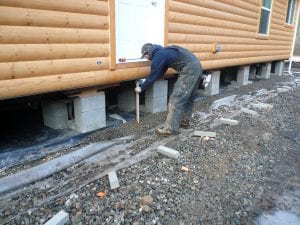
The home pad should be excavated, allowing 18” to 24” around the perimeter to allow for workers. One more thing to consider is accessibility. Since the panels weigh approximately 68 lbs., it makes it easier to have clean, level access from the crates to the home.
Excavating for Blocking Height
Soils preparation.
There are a few key steps to consider when preparing a gravel pad for DURASKIRT™ mobile home skirting. First, assess the soil’s ability to support the home; it’s essential to dig down to native, supportive soil free of vegetation to create a stable foundation. Next, once the site is excavated, measure the manufactured home’s waste lines to ensure there is sufficient slope toward city sewers or a septic tank. This information, typically provided by the factory before shipment, includes the exact location and dimension from floor or beam height, which is crucial for planning the layout.
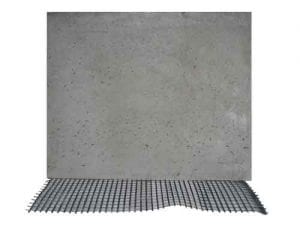
With the sewer height established, adjust the level by bringing in gravel, ensuring the finished height from the gravel to the bottom of the home’s joists is exactly 31”. This optimal height minimizes the need to cut DURASKIRT™ panels for a seamless fit. Additionally, when installing DURASKIRT™ on wet soil, it’s important to lay down a layer of gravel first for drainage and stabilization. Alternatively, if the soil remains wet, digging down about a foot to reach drier soil before laying the DURASKIRT™ fabric can be effective. This dry, compacted base is essential because it provides the necessary friction for the fabric to lock in place securely, preventing shifting over time. By carefully preparing the site with these steps, you’ll create a strong, durable foundation that supports both the home and the DURASKIRT™ skirting.
A Word on Factory Installed Belly Band
Factory-installed belly band that leaves a 2” distance from the bottom of the rim joist to the bottom of the belly band is optimal. Some of the brands that do this are Marlette and Fleetwood. This saves time and material when installing DURASKIRT™.
Although these are the optimal conditions for DURASKIRT™, they certainly do not stop us from being able to prepare all sites. We’ve installed DURASKIRT™ on slopes and extreme height variations where we extend the framework under the home. This style is called a stepped foundation look, and we will be covering this in another article with photos.
For more information about DURASKIRT™ mobile home skirting, call us, today, at 360-333-5498. You can also request information by completing the form at the bottom of this page (in the footer).











Recent Comments